
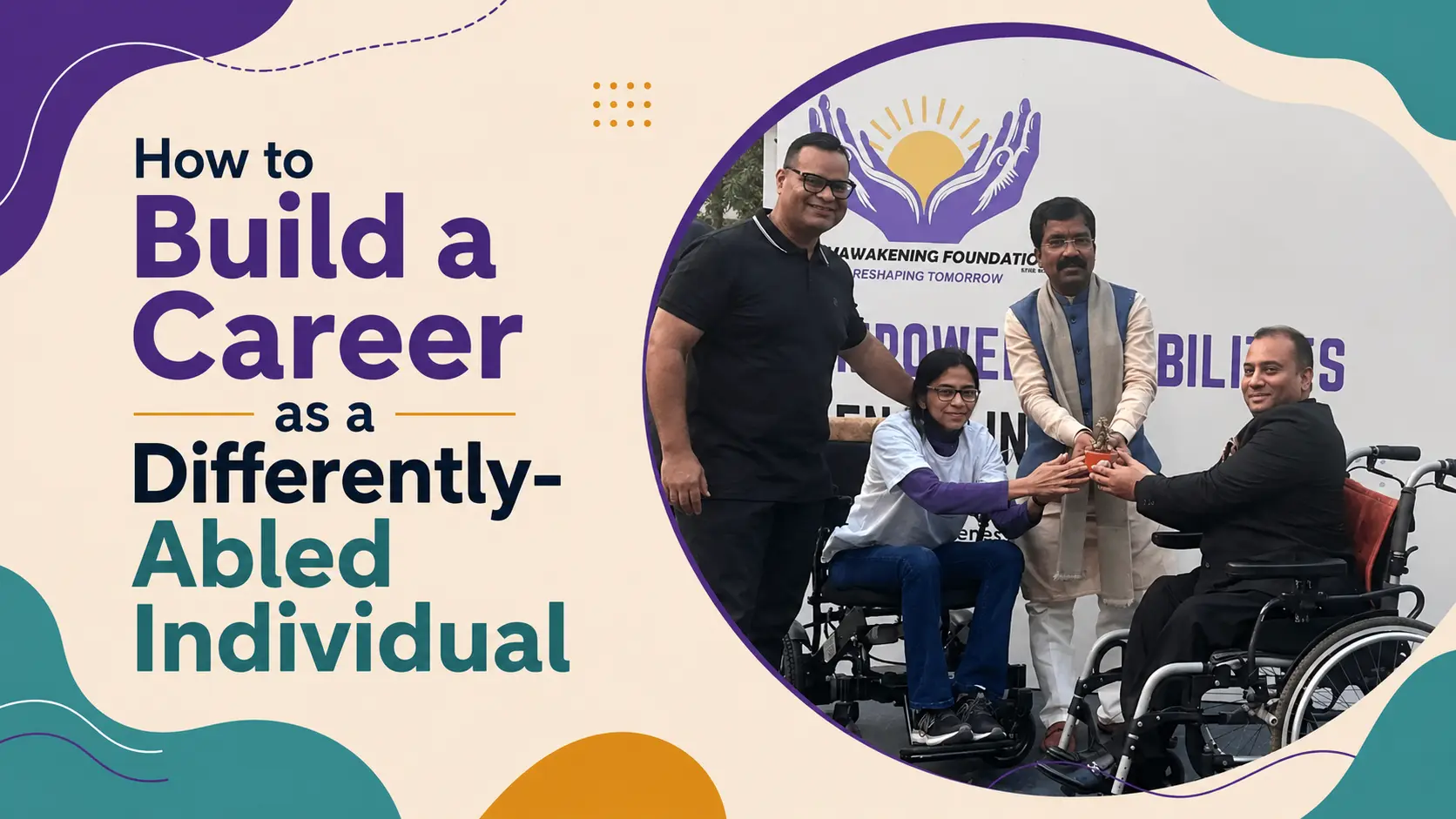
Nobody talks about this enough, but limitations have never been the thing that defines a career. Strengths do. Choices do. The opportunities you manage to reach do. And for differently abled individuals, the point was never to fit into spaces built for someone else. It was to find the ones where talent actually gets seen.
The conversation around jobs for differently-abled persons has moved well beyond surface-level inclusion. Today, it reaches into empowerment, independence, and sustainable growth. With disability-friendly workplaces becoming more common, remote work expanding access, and hiring shifting toward skills over labels, the professional landscape is changing faster than most people realise.
But what makes the real difference is knowing where to begin, what deserves your focus, and how to navigate the road ahead. This guide walks you through that, with practical clarity, honest insight, and real direction.
Career Building for Differently-Abled People
No career, least of all one built by a differently abled person, should rest on compromise alone. It should be built on deliberate, informed decisions that honour your strengths and move you toward your long-term goals.
Employment is not charity, and it is past time we retired that mindset. Jobs for differently abled persons exist across industries, from IT and digital marketing to education, creative arts, and public administration. The turning point comes when you approach the job market as someone who has something to offer, not someone waiting to be given a seat.
- Explore roles that match your abilities and interests, going well beyond those labelled as “suitable”
- Build your professional network through LinkedIn, job portals like disabilityjobs.gov.in, and community meetups
- Seek out employers known for maintaining disability-friendly workplaces and inclusive hiring practices
- Apply for government positions where 4% reservation is mandated under the RPwD Act, 2016
Understanding Your Strengths and Abilities
The dialogue around work for differently abled persons tends to circle back to limitations, over and over. That habit needs to be broken. A person with a visual impairment may possess an extraordinary ear for language, making them a strong fit for content, translation, or voice-based roles. Someone with limited mobility might bring a depth of concentration that is tailor-made for data analysis, programming, or research.
- Take formal strengths assessments or aptitude tests built for differently abled individuals
- Ask mentors and counsellors for candid feedback on where your abilities stand out
- Document past achievements to form a clear picture of your capabilities
- Prioritise transferable skills: communication, problem-solving, time management, and digital literacy
Exploring Career Options for Differently-Abled Individuals
The range of career options has widened in ways that genuinely matter. Between government reservations and inclusive private sector hiring, more pathways are open today than ever before.
1. Corporate & Private Sector Jobs
Several companies are now deliberately building workplaces that are disability-friendly.
Popular roles include:
- Data entry & operations
- Customer support (especially remote)
- Digital marketing
- Software development
- HR and administration
2. Government Opportunities
Jobs for the differently-abled in government continue to represent some of the most stable career paths on offer.
Popular roles include:
- Banking roles
- Railway jobs
- Administrative services
- Public sector units (PSUs)
Importance of Skill Development and Continuous Learning
In a competitive job market, raw potential is never the whole story. Differently abled individuals who invest in continuous skill development consistently outpace those who lean on reservations or goodwill as their sole advantage.
The NSDC runs vocational training in areas such as customer service, digital marketing, and data entry. Online platforms like Coursera and Udemy offer courses with accessibility features such as captioning and screen reader support.
- Digital literacy and IT fundamentals are now essential in the modern job market
- Domain-specific certifications (Tally, Google Digital Marketing, coding bootcamps)
- Communication skills for professional settings, covering both written and verbal proficiency
- Soft skills: teamwork, adaptability, and self-advocacy
Almawakening Foundation’s Role in Empowering Differently-Abled Careers
This is where ideas become real. Recognised as one of India’s leading NGOs for inclusion, the Almawakening Foundation operates at the intersection of awareness, education, and empowerment for differently abled individuals. Driven by a vision of making inclusion the default, the Foundation runs targeted programmes designed to address career challenges head-on.
- Education and Skills Training: Vocational programmes and structured skill-building initiatives that prepare differently abled individuals with career-ready abilities
- Community Engagement: Events like Purple Fest and EAEA that foster meaningful connections between individuals, employers, mentors, and peer networks
- Advocacy: Empowering individuals with awareness of their legal rights under the RPwD Act
- Partnerships: Working alongside organisations across India to create pathways from education to employment
Across 10 states and over 15,000 lives, Almawakening empowers differently abled individuals to walk through doors they deserve to open, armed with real skills and lasting confidence.
Conclusion
For a differently abled individual, building a career does not mean sitting back and hoping the world adjusts on its own. It means gaining the right skills, knowledge, and support and stepping forward to claim what you have earned.
Barriers exist. But so do the laws that protect you, the organisations that advocate for you, and the growing number of disability-friendly workplaces that recognise your talent. Lead with your strengths, stay devoted to learning, and never let another person set limits that are not theirs to set.
Ready to move forward? Get in touch with Almawakening Foundation to explore our skill-building programmes and career support offerings. Visit almawakening.org or email info@almawakening.org to arrange a consultation or request a custom quote.