
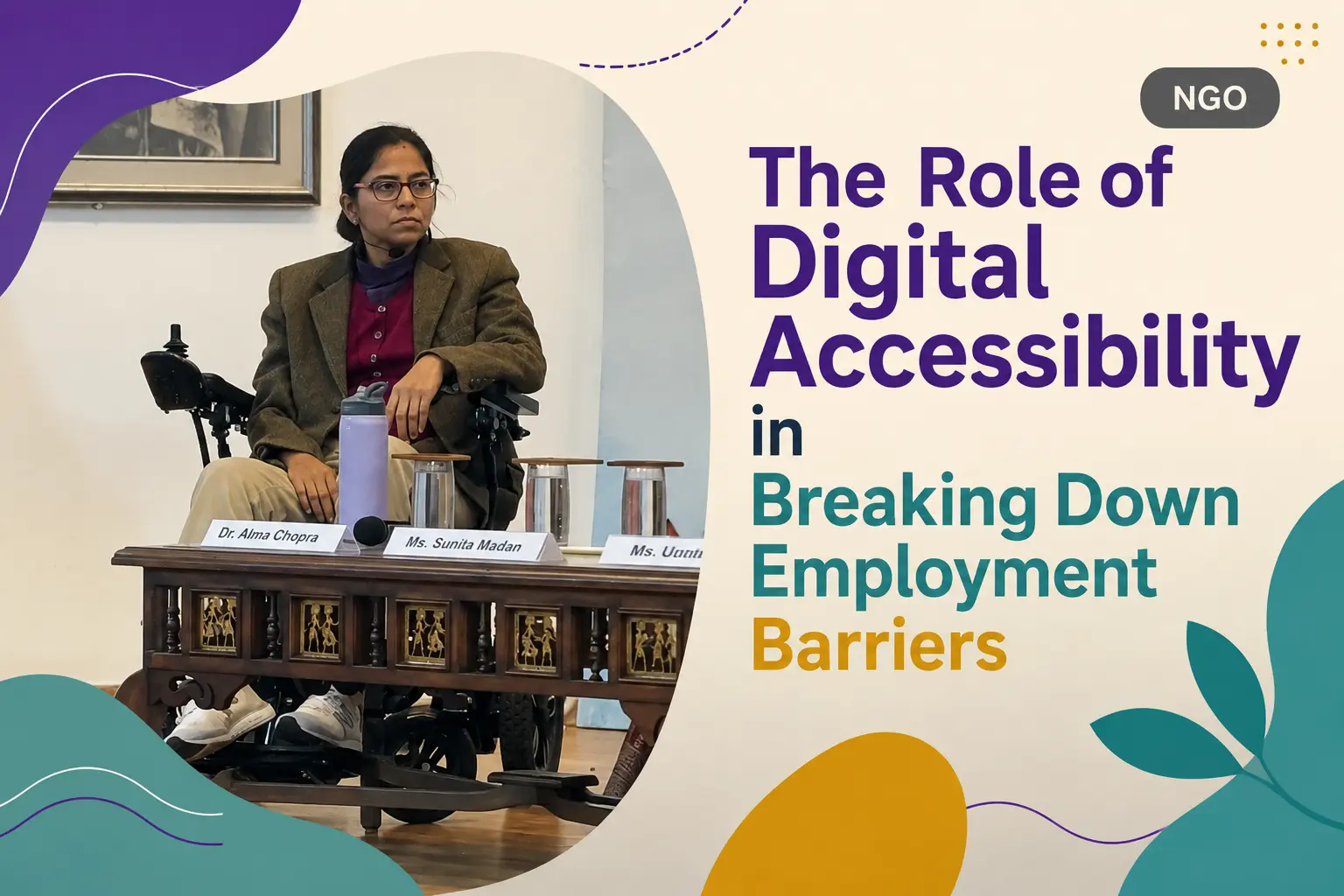
Let us be honest for a moment. Talent? Not rare here. Opportunity is the rare bit.
Across India, and honestly well past its borders too, there are countless skilled, capable, differently abled individuals ready to contribute, innovate, and lead. And yet something as ordinary as opening a job portal, filling out a form online, or showing up for a virtual interview can quietly shut doors before anyone gets the chance to even knock.
Here is where digital accessibility stops being a “nice-to-have”. It becomes the equaliser.
For organisations like Alma Awakening Foundation, awareness is not the end goal. Action is. Digital accessibility happens to be one of the strongest levers we have for closing the gap between talent and opportunity.
Understanding Digital Accessibility
What does digital accessibility actually mean in practice? Websites, apps, and platforms that are built so that everyone, including differently abled individuals, can really use them. Screen reader compatibility. Keyboard navigation. Captioning, colour contrast, alt text, voice controls. Think of them as ramps and elevators, just for the digital world.
The legal push in India has picked up real pace. The RPwD Act of 2016 recognises 21 conditions and mandates accessibility across public and private infrastructure. In 2025, the Supreme Court ruled that digital access is a fundamental right under Article 21. SEBI followed up with a circular mandating compliance for all regulated entities. And yet. A 2025 national study turned up something jarring: an average of 116 accessibility errors per homepage across the country’s 100 most visited websites.
The intent is there. The execution is not.
Employment Barriers Faced by Differently Abled Persons
India’s workforce participation rate for differently abled persons sits at roughly 36 per cent. For everyone else? 60. And only 23 per cent of differently abled women hold jobs. Out of an estimated 13 million employable differently abled individuals, no more than 3.4 million are working today.
So what sits behind the gap?
- Job portals that do not support assistive technologies
- Virtual interview platforms built with no captioning or sign language integration
- Hiring managers carrying attitudinal biases, assuming limitations before they have tested actual capabilities
- Inaccessible workplace tools across both physical infrastructure and digital software
- Educational inequities that limit skill-building and professional training long before any job search begins
None of this is an edge case. These are patterns. Systemic ones.
How Digital Accessibility Creates Equal Opportunities
Build accessibility from the ground up, and the whole playing field shifts.
- Accessible job portals let differently abled candidates apply and search on their own.
- Captioned video interviews stop communication barriers from filtering out qualified candidates.
- Onboarding that is screen reader-friendly welcomes a new hire with visual impairment from day one.
- Remote-first tools with voice commands and keyboard shortcuts open up roles that were once out of reach.
- Accessible learning platforms help differently abled employees upskill at the same pace as their peers.
The government’s PM-DAKSH DEPwD portal, with 250-plus skill courses and geotagged job listings, is one step. Real progress, though, depends on private organisations weaving accessibility into their own ecosystems.
Benefits of Accessibility for Organisations
Inclusion is not charity. It is a strategy.
| Benefit | Impact |
| Wider talent pool | Access to 13 million-plus employable differently abled individuals |
| Higher retention | Inclusive workplaces report stronger loyalty and lower attrition |
| Legal compliance | Alignment with RPwD Act and SEBI circulars |
| Brand reputation | Consumers increasingly favour genuinely inclusive organisations |
| Tax incentives | RPwD Act benefits for employers with a 5 per cent or more differently abled workforce |
Take SAP Labs India. Accessibility audits are baked into their regular operations now. Amazon and Godrej Properties have tied up with government initiatives to bring differently abled individuals into their workforce. None of this counts as charity work. It is a competitive edge.
The Role of Awareness and Advocacy
Policy without awareness is just paperwork. Real change shows up only when mindsets shift.
The Almawakening Foundation is doing that work where it matters most, on the ground. The Foundation, an NGO focused on education and inclusion, has run accessibility workshops and awareness drives that have reached over 15,000 people across 10 states. Sympathy is not what we are chasing. The point is systemic change in how workplaces and digital platforms think about inclusion.
A job portal locking people out? Report it. A company marketing itself as inclusive while its tools fail with assistive technology? That gap has got to be called out. Inclusion without infrastructure behind it is marketing fluff. Nothing more.
The Future of Inclusive Employment
India is at a turning point. The legal architecture is in place. The Supreme Court has spoken. The Accessible India Campaign keeps moving forward.
What comes next rests on three things, really. Digital infrastructure that differently abled individuals can actually use. Employer mindsets that go past ticking compliance boxes. Steady advocacy from organisations that refuse to let inclusion fade into a buzzword.
Every job portal that cannot be navigated, every interview missing captions, and every website that fails a screen reader test are doors slammed shut on someone who has every right to walk through them. The question is no longer whether we should act. The question is why we have waited this long.
Ready to be part of the change? At Almawakening Foundation, we are building a world where inclusion is the standard.