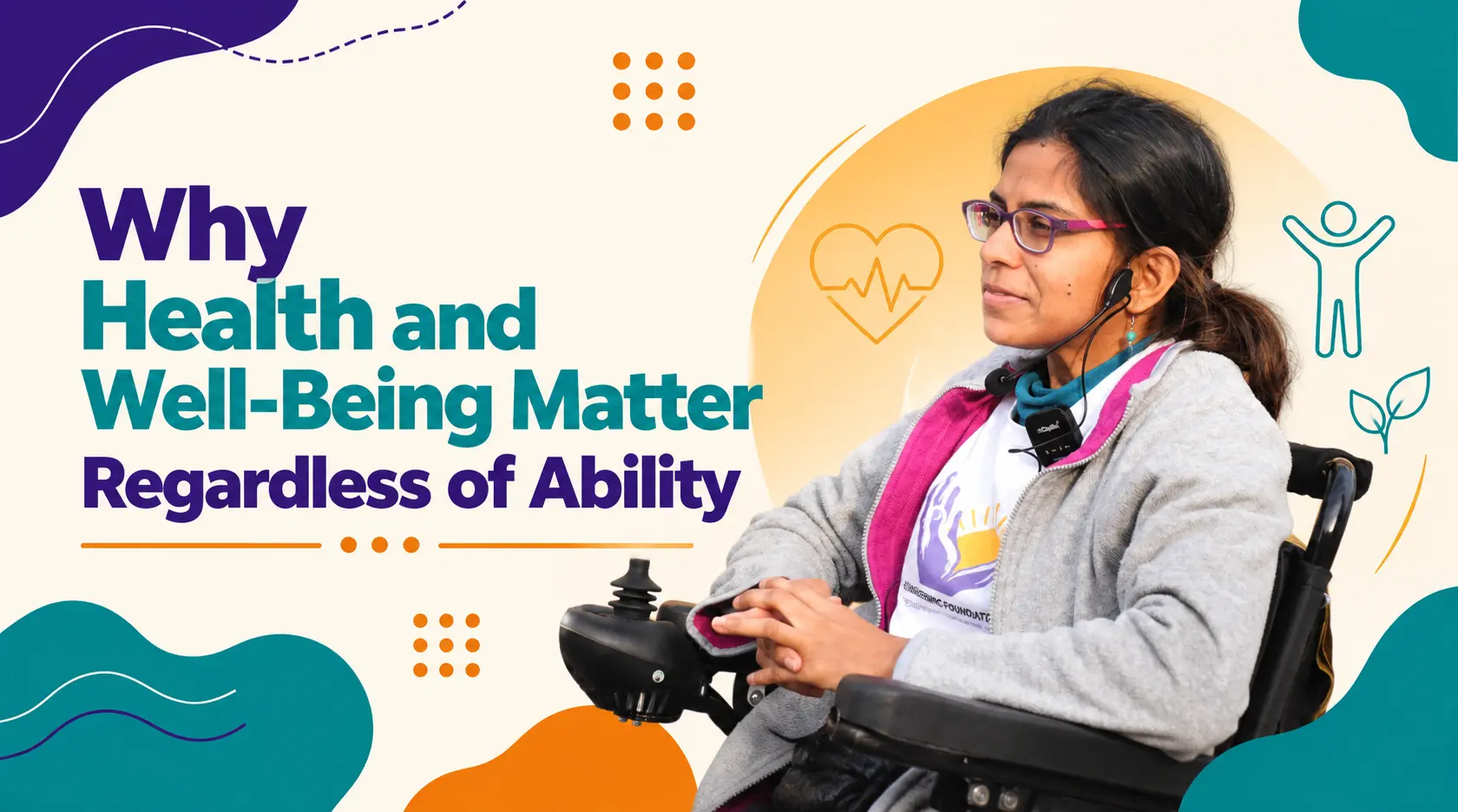
At Almawakening Foundation, we keep returning to one simple conviction: health and well-being are not rewards for people who already hold every advantage. They are the foundation every person needs to learn, work, connect, and lead a dignified life, whatever their body can or cannot do. That belief sits at the centre of our Health & Well Being work, and it shapes every other programme we run.
The scale of the problem is documented. According to the World Health Organization, 4.5 billion people worldwide lack access to basic health services, and 2 billion face financial hardship because of health costs. Those numbers are not about rare diseases. They are about ordinary people who delay a checkup, skip a screening, or avoid a follow-up because the cost feels impossible. When health is treated as a luxury, inequality grows, and differently abled people, who already face the highest barriers, are the first to pay the price.
Why Health Is Not a Luxury Item
Most people think of health as something that happens inside a clinic. Health and well-being start much earlier. They start with safe water, enough food, a place to rest, and a community that does not turn someone away because they need a ramp, a sign language interpreter, or extra time.
The World Health Organization describes primary health care as a whole-of-society approach, with prevention, treatment and rehabilitation as close to everyday life as possible. That definition matters because it places health in neighbourhoods, schools, workplaces and homes, not just hospitals.
| Health as a luxury | Health as a foundation | |
|---|---|---|
| Who gets care | Those who can afford it | Everyone, close to home |
| When care arrives | At crisis point | Through preventive healthcare |
| Differently abled people | Adapt or go without | Designed from the start |
| The outcome | Debt and exclusion | Participation and dignity |
For us, that means we do not wait for people to find us. We organise medical camps, screenings and check-ups through our Health & Well Being programme and bring care closer to underserved communities. We also pay attention to the quieter side of it all: mental health support, and the kind of emotional safety that lets a person say they are struggling without shame.
What Inclusive Health Looks Like on the Ground
Inclusive health does not require a perfect building. It requires a shift in thinking. A differently abled person who uses a mobility aid should not have to choose between staying home and risking an inaccessible clinic.
A student who learns differently should not sit in a classroom that assumes everyone moves at the same pace. A woman in a rural village should not need permission to see a doctor. That is why our health work is not separate from anything else we do. Our accessibility and inclusion services keep health information and care from being locked behind physical, sensory or communication barriers.
Our Education & Skills Training programmes give people the knowledge to understand their own health and the confidence to ask questions. Our Empowering Women initiatives recognise that when a woman gains control over her own health and well-being, her whole household grows stronger.
7 Reasons Health and Well-Being Matter Regardless of Ability
Health is not a special interest. It is the quiet engine underneath every other goal.
- Health protects dignity. When a person can access care without humiliation, they keep their sense of self. Barrier-free services say, “You belong here.”
- Well-being powers education and work. A child who cannot see the blackboard, or a worker managing chronic pain, will fall behind. Simple health support turns that around.
- Preventive healthcare saves money and suffering. A screening costs far less than an emergency. Catching a condition early keeps a family out of medical debt.
- Mental health is not separate. Anxiety, isolation, and burnout are health conditions too. Inclusive emotional support keeps people connected.
- Accessible care creates safer communities. When clinics and public spaces work for differently abled people, everyone benefits. Ramps help parents with prams. Clear signage helps everyone.
- Caregivers and families become stronger. A person who receives proper support needs less round-the-clock care, which frees parents, siblings and children to build their own lives.
- Inclusion depends on health and well-being. Nobody can advocate for their rights, learn a skill or join a community while exhausted, in pain or afraid. Health is the first step to presence.
How We Turn This Idea into Action
We are not a think tank. We are an organisation running programmes across 10 states, reaching over 15,000 people.
Through ENABLE, we create access, safety and dignity in public spaces, because a clinic only counts if the building lets you in. Through ENGAGE and ENVOLVE, we build the social connections and shared responsibility that make well-being sustainable. Through ELEVATE, we bring differently abled voices into the rooms where health and community decisions are made. And through EXPAND, we work on the infrastructure and accessible ecosystems that make good care permanent rather than occasional.
The link between health and empowerment is not theoretical. When a person receives accessible care, they can show up to school. When they show up to school, they can learn a skill. When they learn a skill, they can earn an income. That upward spiral starts with health, which is why our guide to inclusive support services in India begins there too.
The Role of NGOs in Closing the Health Equity Gap
Governments and hospitals cannot do this alone. Sustainable Development Goal 3 calls for universal health coverage, yet progress has slowed in many regions. This is where a health care NGO earns its place: going where formal systems do not reach, speaking the local language, understanding the hesitations, and adapting quickly.
We use that flexibility to treat people as whole individuals rather than cases. A woman who comes for a checkup may also need help with her daughter’s education. A young person who receives mental health support may then be ready for vocational training. We do not separate those needs, because life does not separate them. Practical guides help here too, which is why we walk people through getting a UDID certificate, the document that unlocks subsidised care and devices, and publish advice on nutrition and exercise for wheelchair users.
What You Can Do Today
You do not need a medical degree to make health equity real. Learn what inclusive health looks like. Then back to the people doing the work on the ground. Every contribution, however small, becomes a screening, a training session, or a moment of dignity someone might otherwise miss.
Health and well-being were never meant to be privileges. They are shared promises, and promises need keeping.
Stand with us. Volunteer, partner, or support our work today, and help make sure the next health camp, the next accessible classroom, and the next woman who sees a doctor without fear all arrive on time.