
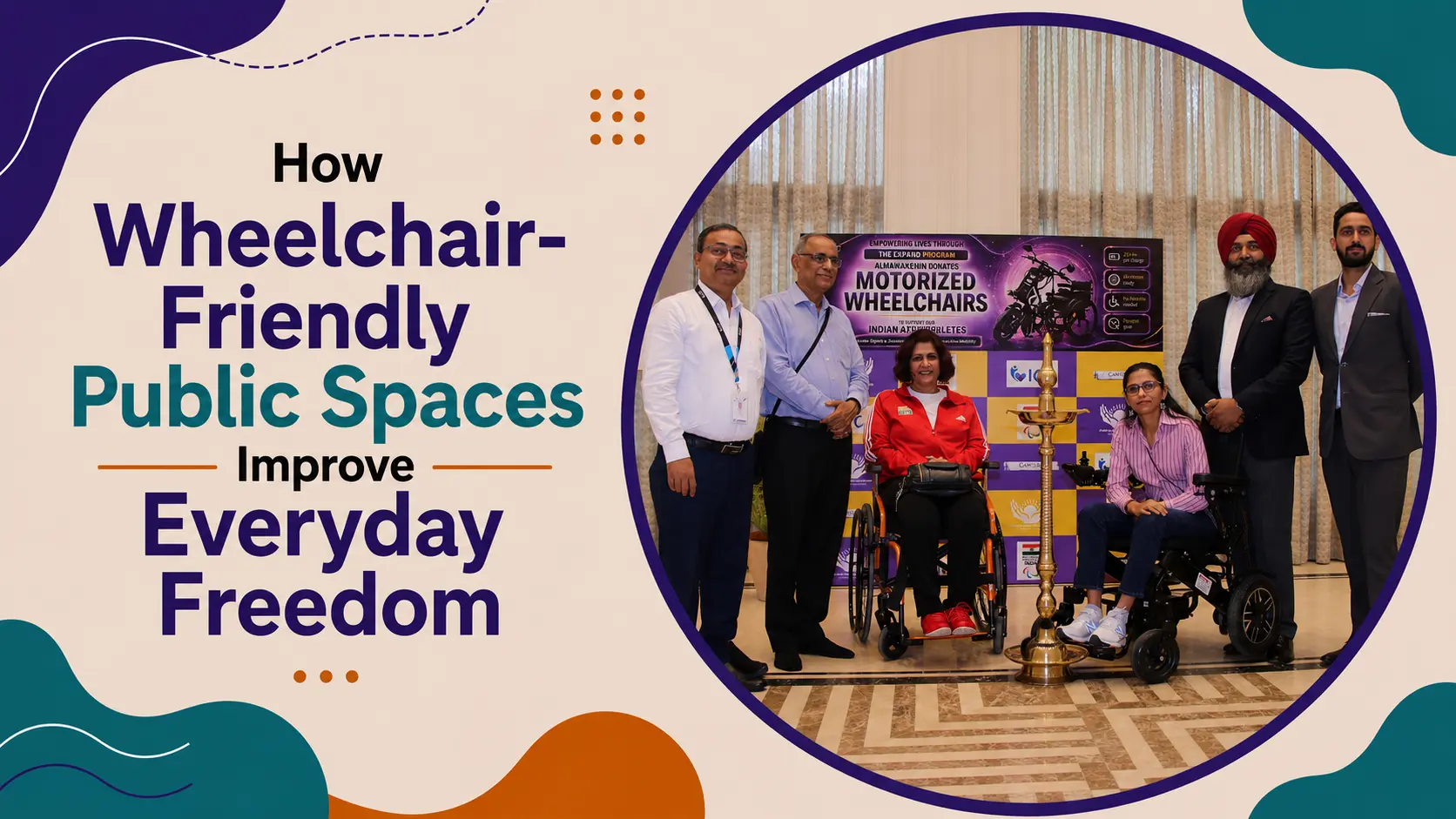
Wheelchair-friendly public spaces are more than just ramps and wide doors. They are gateways to independence, dignity, and everyday freedom for millions of people. When a sidewalk has a smooth curb cut, a café has an accessible entrance, or a park offers paved pathways, it means someone who uses a wheelchair can meet a friend, grab a coffee, or enjoy a sunny afternoon without barriers. At the Almawakening Foundation’s Disability Inclusion program, we see firsthand how inclusive design transforms lives by removing the physical obstacles that often isolate individuals from their communities.
The Basics of Wheelchair-Friendly Design
True accessibility goes beyond compliance checklists. It means designing spaces that everyone can use comfortably and safely. Key features of wheelchair-friendly public spaces include:
- Wide, step-free entrances and pathways with slip-resistant surfaces
- Elevators or ramps alongside stairs, with appropriate slope gradients
- Accessible restrooms with grab bars and enough turning radius
- Lowered counters at reception desks, ticket booths, and service areas
- Clear signage with braille and high-contrast visuals
- Ample accessible parking and drop-off zones near main entries
These elements work together to create an environment where a person using a wheelchair doesn’t have to plan every outing like a military operation. Instead, they can enjoy the spontaneity and freedom that many take for granted.
7 Ways Accessible Spaces Enhance Daily Life
1. Encourages Social Connection
When cafes, theatres, and community centres are wheelchair-friendly, they become true gathering places. Friends can meet without worrying if someone will be left outside. This simple access nurtures relationships and reduces the isolation that often accompanies mobility challenges. Our ENGAGE program fosters exactly these kinds of inclusive community connections.
2. Boosts Economic Participation
Shopping malls, restaurants, and local markets that prioritise accessibility open their doors to a wider customer base. People with disabilities have significant purchasing power, yet many businesses miss out because their premises are unwelcoming. Wheelchair-friendly public spaces help local economies thrive while giving everyone the freedom to shop, dine, and enjoy entertainment independently.
3. Promotes Physical and Mental Health
Access to parks, recreation centres, and nature trails directly improves well-being. Fresh air, green surroundings, and physical activity are vital for mental health. When these spaces are inclusive, people using wheelchairs can maintain an active lifestyle, reducing secondary health issues. The Health & Well-Being initiatives we support align perfectly with this vision of a healthier, more active population.
4. Supports Employment and Education
Imagine a workplace or a school that isn’t wheelchair-friendly. It means a qualified person might be unable to attend an interview or a student can’t get to class. Accessible public infrastructure is a prerequisite for equal opportunity. Our Education & Skills Training and ELEVATE programs break down these barriers so that individuals can pursue learning and livelihood without physical constraints holding them back.
5. Enables Spontaneous Travel and Mobility
Accessible public transportation, smooth sidewalks, and curb cuts mean a person can decide to go to the library, visit a temple, or attend a festival on a whim. This freedom of movement is a cornerstone of independent living. It transforms daily life from a series of obstacles into a world of possibilities.
6. Fosters a Culture of Inclusion
When a city invests in wheelchair-friendly public spaces, it sends a powerful message: everyone belongs. This cultural shift reduces stigma and encourages more people to participate openly. Initiatives like our ENABLE program work to mainstream this inclusive mindset, demonstrating that accessibility benefits the entire community, not just those with disabilities.
7. Future-Proofs Communities
As populations age, the need for accessible design grows. Wheelchair-friendly spaces are easier for seniors, parents with strollers, and anyone with temporary injuries to navigate. By prioritising inclusive infrastructure today, communities build resilience and ensure long-term livability for all generations.
The Broader Impact on Communities
Wheelchair-friendly public spaces don’t just help individuals; they strengthen the social fabric. According to the World Health Organisation, over 1 billion people worldwide experience some form of disability. Ensuring public spaces are accessible isn’t just a legal requirement under frameworks like the Rights of Persons with Disabilities Act; it’s a moral imperative. When a community is truly inclusive, everyone benefits from a richer, more diverse environment.
How Almawakening Foundation Champions Accessibility
At the Almawakening Foundation, we believe in a world where disability never limits potential. Our Disability Inclusion work goes beyond physical spaces into education, employment, and social attitudes. Through our ENABLE initiative, we provide resources and advocacy to make public and private spaces more accessible. And with ENGAGE, we bring communities together to celebrate diversity and push for change. Supporting these programs means you’re directly contributing to a future where every sidewalk, every building, and every service is welcoming to all.
Simple Steps to Advocate for Change
Creating wheelchair-friendly public spaces starts with awareness and action. Here’s how you can help:
- Speak up at local government meetings about accessibility gaps in your area.
- Support businesses that prioritise inclusive design and encourage others to follow suit.
- Volunteer with organisations like Almawakening Foundation that work on the ground to create change.
- Donate to funds that enable retrofitting of existing spaces and awareness campaigns.
Every step toward accessibility is a step toward freedom. Whether you’re a policymaker, a business owner, or a concerned citizen, your voice matters. Join us at the Donate page to fuel our mission of building inclusive communities where everyone, regardless of ability, can thrive.