
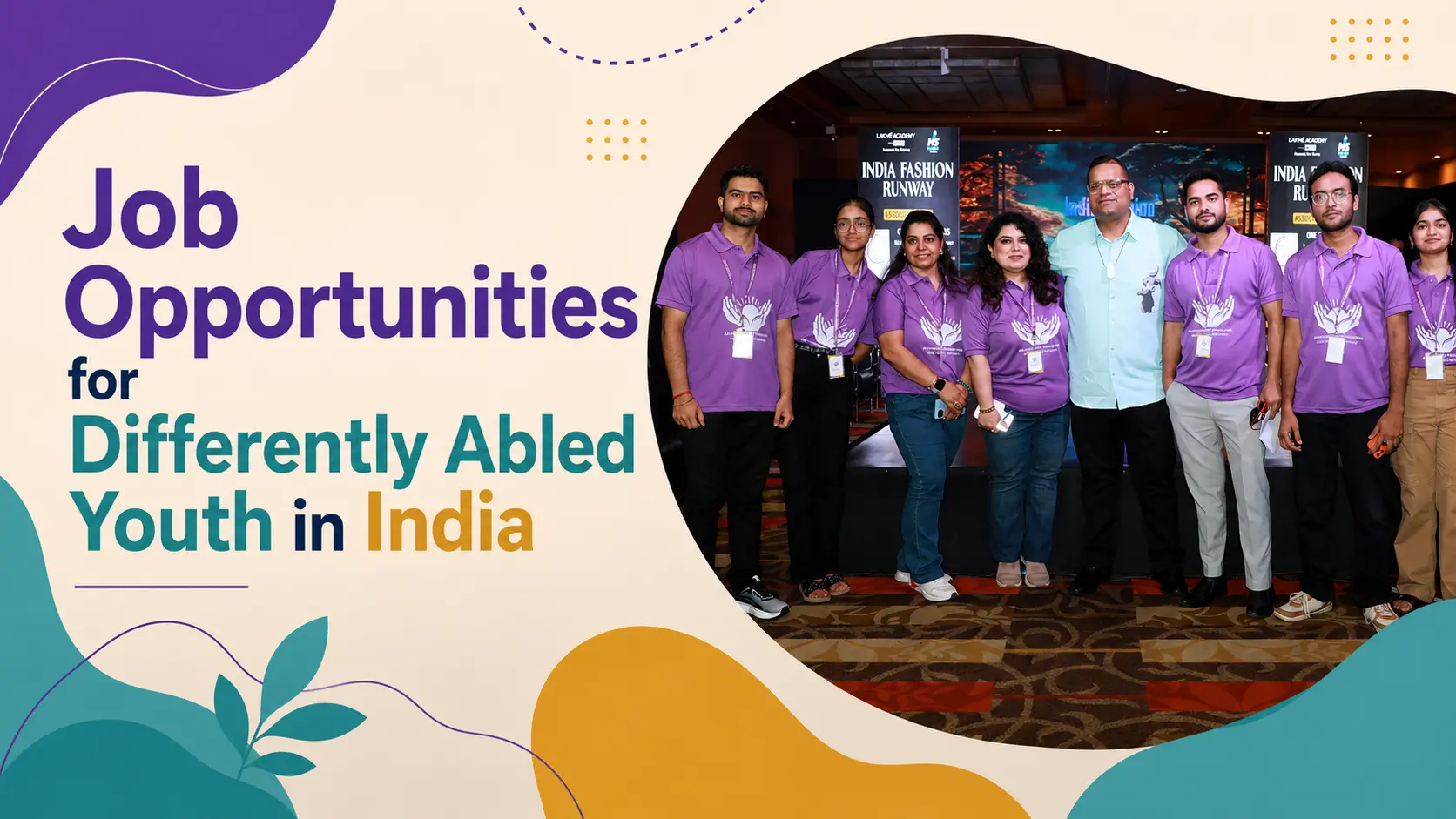
Ask any young person what a first job really means to them, and the answer rarely centres on the salary. It centres on proof. Proof that they are capable, that they belong, that the world holds a place meant for them. For differently abled youth across India, that proof has too often been denied, not for any lack of talent, but for the absence of a door left open.
The heartening news is that the doors are opening. Inclusive hiring in India is no longer a marginal idea. Government schemes are broadening the path, and a growing number of employers are recognising that ability comes in many forms. Real barriers still remain in accessibility, in skill-building, and in attitudes that take time to change. The overall direction, however, is unmistakable. This guide walks through the strongest jobs for differently abled youth in India and how organisations like Almawakening are helping turn open doors into real careers.
Growing Opportunities in the IT Sector
The information technology sector has set the pace in employing differently abled talent. Companies including Infosys, TCS, and Wipro maintain dedicated inclusion programmes, and many IT roles lend themselves well to remote work and assistive technology. Screen readers allow candidates who are blind to write and review code, while speech-to-text software assists those with mobility challenges in data-heavy tasks. The result is a sector in which ability, not physical access, decides the work.
The commitment is reflected in genuine programmes:
- Infosys sets representation targets through its Inclusion and Diversity initiative, providing internships and full-time roles with customised onboarding.
- TCS offers assistive tools and flexible arrangements through its Ability programme.
- Wipro concentrates its inclusive hiring on quality assurance and IT support roles.
Policy has played its part in driving this forward. The Rights of Persons with Disabilities Act, 2016, mandates equal opportunity, encouraging many firms to rethink their recruitment practices. Beyond the larger corporations, India’s fast-growing startup scene is becoming increasingly open to differently abled talent, having recognised that diverse perspectives sharpen innovation rather than slow it down.
Breaking into the field is more achievable than it may seem. Certifications in languages like Python or Java, offered on platforms such as Coursera and edX, make a strong starting point, and many of these courses provide financial aid. Almawakening’s ENGAGE programme lays this same groundwork, delivering digital literacy training that covers basic coding and software skills to prepare participants for entry-level IT roles.
Government Jobs and Reservations
For anyone looking for stable, long-term work, government jobs are among the strongest routes available. The system is built to include you, and knowing how it operates gets you halfway there.
The central government sets aside 4% of its posts for differently abled persons, covering public sector banks, railways, and administrative services. A number of states go even further. Kerala and Tamil Nadu, for example, offer up to 5 per cent reservation. These quotas create real job opportunities for differently abled candidates across some of the country’s most secure employers.
Here is where to look:
- Administrative services: The Staff Selection Commission holds examinations like the CGL and CHSL with reserved seats, and it arranges scribes and extra time during the test.
- Railways: The Railway Recruitment Board sets aside roles such as ticket collectors, clerks, and track maintainers.
- Public sector banks: The State Bank of India and Punjab National Bank run dedicated recruitment drives for clerical and officer grades.
- The Department of Empowerment of Persons with Disabilities also operates a central portal listing vacancies across departments, which is worth checking on a regular basis.
The difficulty seldom lies in eligibility. It lies in knowing the process. This is where Almawakening’s ELEVATE initiative proves essential, delivering exam preparation, career counselling, and assistance with requesting accommodations such as scribes or accessible test centres. Through practical workshops on form completion and reservation policies, ELEVATE ensures that no one forfeits a fair opportunity to a procedural hurdle.
Entrepreneurship and Self-Employment
For many differently abled youth, the most exciting professional path is the one they shape with their own hands. Entrepreneurship turns a distinct perspective into a real strength, and the support needed to get started is far closer to reach than most people assume.
Government schemes have eased that initial step in meaningful ways. The Prime Minister’s Mudra Yojana offers collateral-free loans of up to ₹10 lakh for non-farm ventures, while Stand-Up India extends funding to women and SC/ST entrepreneurs, placing a clear emphasis on differently abled founders.
The proof is found in what people are already building:
- A visually impaired entrepreneur in Mumbai runs a flourishing bakery with the help of tactile recipes and voice-controlled ovens.
- A wheelchair user in Delhi launched a mobile repair service operating out of a customised van.
This is where Almawakening’s ENABLE programme makes a difference, backing new founders with mentorship, skill development, and microfinance across fields including handicrafts, digital marketing, and food services, while assisting them in building business plans, registering their ventures, and reaching local markets. Across rural areas, differently abled self-help groups have established small enterprises in poultry, tailoring, and organic farming, often supported by the National Rural Livelihoods Mission.
Vocational and Skill-Based Roles
Vocational training opens real opportunities across hospitality, retail, manufacturing, and agriculture. The proof is already visible on the ground. Through its Ability First programme, Lemon Tree Hotels has built a strong record of hiring differently abled staff across housekeeping, kitchen, and front-office roles.
Retail is moving in the same direction. Chains such as Shoppers Stop and Big Bazaar have opened roles in inventory, billing, and customer service. In manufacturing, Maruti Suzuki has partnered with NGOs to train differently abled workers on assembly lines, relying on visual signals and written instructions rather than spoken ones.
Almawakening’s Education and skills training programmes offer courses in tailoring, computer basics, and soft skills, directly linked to job placements. For example, a six-month tailoring course in partnership with local textile units guarantees a job upon completion for candidates with locomotor disabilities. The programmes also include on-the-job training and workplace sensitisation for employers, ensuring a smooth transition.
Remote Work and Freelancing
Remote work has emerged as a genuine game changer for differently abled youth. Freelancing platforms such as Upwork and Fiverr enable individuals to offer services in writing, graphic design, virtual assistance, and programming, entirely from home. This flexibility removes the daily commute and allows the creation of jobs for differently abled youth.
Once you begin to notice them, the examples are everywhere. A person with cerebral palsy can build a career as a content writer by using dictation software. A deaf designer can excel in visual work, where communication happens through the screen. Platforms like Toptal and Freelancer now offer project categories suited to differently abled talent, opening doors that a traditional office frequently kept shut.
Almawakening’s ENGAGE programme includes digital literacy training to help youth access these global opportunities, covering topics like creating an online portfolio, bidding on projects, and managing client relationships. The programme also provides guidance on setting up a home office with ergonomic furniture and assistive technology, such as voice-activated assistants and adjustable desks.
Support from Almawakening
Almawakening Foundation is committed to creating an inclusive society where every individual can thrive. Through its Disability Inclusion efforts, the organisation works with employers to make workplaces accessible, provides sign language interpretation, and advocates for policy changes. For example, Almawakening has partnered with over 50 companies to conduct accessibility audits and provide recommendations for ramps, accessible restrooms, and assistive software.
Their ELEVATE and ENABLE initiatives directly prepare youth for the job market by building confidence, technical skills, and networks. ELEVATE offers mock interviews, resume workshops, and job fairs specifically for PwD candidates, while ENABLE provides seed funding and mentorship for startups. The foundation also runs a helpline for career advice and connects youth with employers who have inclusive hiring policies.
How You Can Get Involved
If you are a differently abled youth seeking employment or an employer wanting to build an inclusive workforce, reach out to Almawakening. You can also support our mission by donating or volunteering. Visit the donate page to contribute and help create more jobs for differently abled youth in India. Your donation can fund a skill training workshop, provide assistive devices, or support a job placement drive. Volunteers can offer their expertise in areas like career counselling, legal advice on disability rights, or technical training.
Together, we can build a more inclusive India where every youth has the opportunity to achieve financial independence and dignity.