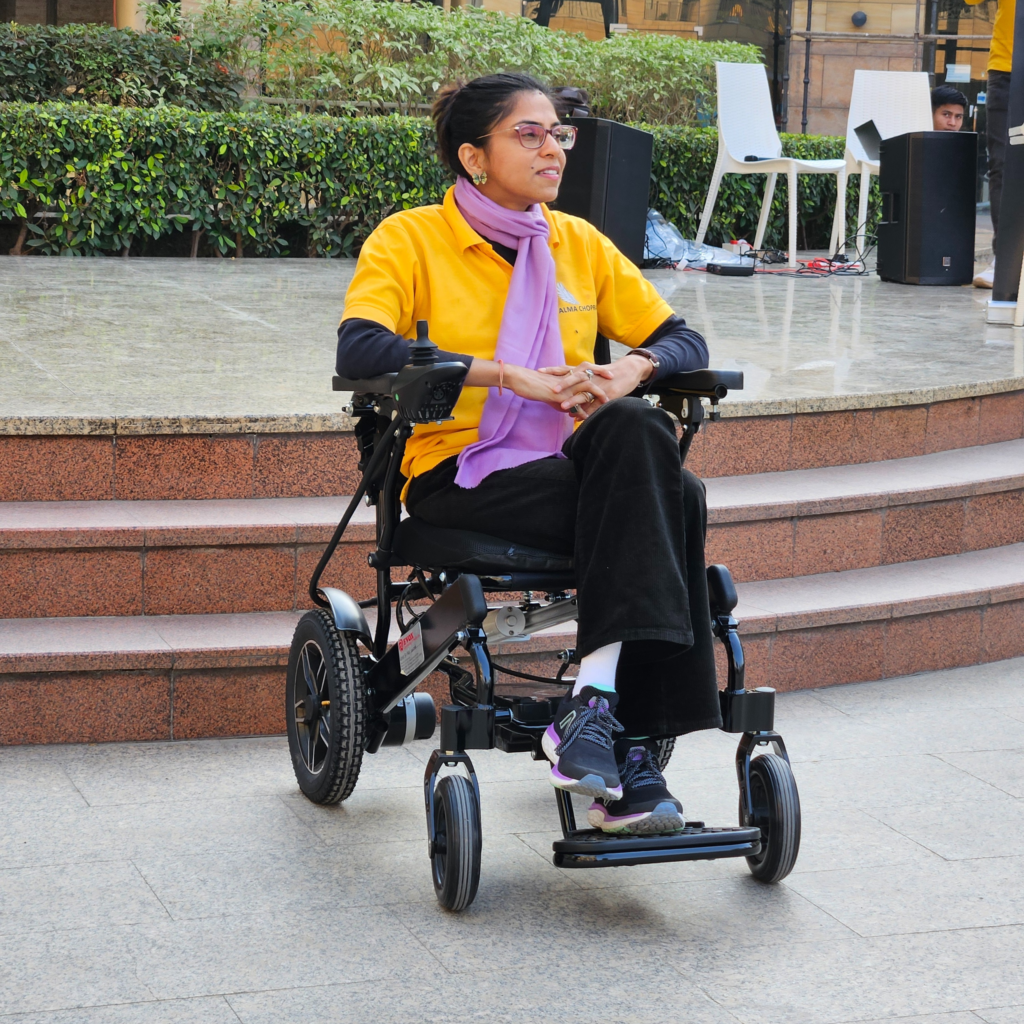
Ramps get built. Elevators get installed. Checklists get signed off. And yet, far too many differently abled individuals still walk into spaces where they don’t truly feel welcome. Because inclusion was never just about access.
True inclusion is about whether people feel seen instead of stared at, supported instead of singled out, and valued instead of merely accommodated. It’s about emotional accessibility—the quiet, often invisible layer of inclusion that determines whether someone belongs or simply exists on the margins. When inclusion stops at infrastructure, stigma remains. Mindsets stay unchanged. And opportunities, though technically available, remain out of reach.
This is where the real conversation begins. True inclusion goes beyond ramps and wheelchairs—it lives in attitudes, language, education, workplaces, and communities. And until we address that deeper layer, accessibility alone will never be enough.
Accessibility Is Necessary, But Not Sufficient
You have built the ramp. You have installed the accessible restroom. You have added the braille signage.
So why does something still feel incomplete?
Here’s the uncomfortable truth that many organisations are just beginning to understand: accessibility is the floor, not the ceiling. It’s the starting line of inclusion, not the finish line. True belonging for differently abled individuals requires something far more profound than physical accommodations. It demands a fundamental shift in how we think, act, and connect as a society.
If you have ever wondered why awareness campaigns alone have not moved the needle on disability inclusion, you are asking the right question. And you are not alone. At Almawakening, this distinction matters deeply. Because accessibility opens the door, but belonging invites people in.
Disability Inclusion and the Power of Belonging
One phrase captures this idea perfectly: “Accessibility is being invited to the party. Inclusion is being asked to dance.”
At its core, disability inclusion awareness comes down to the difference between tolerance and true acceptance, between showing up and actually taking part. Differently abled individuals should not just exist in a space. They should be able to flourish there.
This is precisely where well-meaning efforts tend to stumble. They satisfy compliance requirements without ever questioning whether their culture, mindset, and daily interactions actually embrace diverse abilities. The consequence? Differently abled individuals may technically access opportunities, but still run into invisible barriers such as
- Unspoken bias and assumptions about capability that go unchallenged
- Feeling isolated even while sitting in the same room as everyone else
- Limited chances to contribute in meaningful, visible ways
- Being overlooked when it’s time to lead or weigh in on important decisions
Real inclusion goes deeper than accessible infrastructure. It’s about creating spaces where every individual feels seen, respected, and free to participate on equal footing.
Changing Mindsets to Create Inclusive Spaces
Building an inclusive society demands addressing attitudinal barriers, which frequently prove more entrenched than physical ones. These are the assumptions that differently abled individuals need “special treatment” when they simply deserve equal treatment. They are the well-meaning but condescending behaviours that cast capable adults as objects of pity rather than contributors with something to offer.
Changing mindsets is not a matter of guilt or blame. It’s about awareness, education, and deliberate practice. It starts with recognising that most environments were never designed with diversity in mind and that reimagining them improves outcomes for everyone, not just differently abled individuals.
Creating inclusive spaces starts with:
- Unlearning the stereotypes that reduce real people to simple labels
- Talking openly about differences rather than pretending they don’t exist
- Choosing respect over sympathy, and collaboration over charity
At Almawakening, this cultural transformation drives everything we do. Through sensitisation workshops and events like “Empowering Abilities Enabling Access,” we create spaces where differently abled individuals and communities learn together, breaking down the invisible walls that physical accessibility cannot touch.
Inclusion in Education, Work, and Community Spaces
The need for genuine inclusion shows up everywhere differently-abled individuals navigate daily life.
Students with diverse abilities are often integrated on paper, yet they face different expectations or quiet signals that set them apart. True educational inclusion asks more of us: adapting how we teach, yes, but never lowering the bar for any student.
In Workplaces
Employment gaps for differently abled individuals have not budged much. Talent isn’t what’s missing; systemic barriers are. Inclusive workplaces understand this. They move past quotas to build environments where employees with diverse abilities can thrive and feel truly valued.
In Communities
From public events to recreational activities, many community spaces still feel like they were designed without individuals with disabilities in mind. A truly inclusive society doesn’t retrofit accessibility as an afterthought. It builds experiences that anticipate and welcome diverse participation from the start.
Across all these environments, one principle holds: inclusion must be built into the design from the beginning, not retrofitted as an afterthought. This is why our work at Almawakening spans education, skill development, and community engagement simultaneously, reaching over thousands of people.
How Almawakening Works to Enable True Inclusion
Many organisations address one piece of the inclusion puzzle. Some focus on advocacy. Others provide services. Still others run awareness campaigns. Real impact requires connecting all these elements:
- Awareness Campaigns that challenge stigma through direct community engagement, not passive messaging.
- Skill Development Programs that equip individuals with disabilities with practical abilities and confidence.
- Health & Well-being Initiatives that address the holistic needs of differently abled individuals and their families.
- Advocacy Efforts are pushing for policies recognising inclusion as a right, not a favour.
- Strategic Partnerships with schools, foundations, and organisations that extend impact across sectors.
This integrated approach recognises that true inclusion requires working on multiple fronts. You cannot empower differently-abled individuals without transforming the environments they enter. You cannot change attitudes without creating spaces where people of all abilities interact as equals.
Wrapping Up
Accessibility is the starting point. Inclusion is the destination.
If we want a society where differently abled individuals do not just survive but thrive, we must go further. We must build cultures of belonging, challenge the stigma that limits opportunity, and commit to disability inclusion as an ongoing practice rather than a one-time project. Almawakening stands at this intersection—where awareness meets action, and intention becomes impact.
If you are ready to move beyond surface-level inclusion and create spaces rooted in belonging, empathy, and dignity, now is the time. Contact us today to schedule a consultation or request a custom quote—and take the next step toward true inclusion.