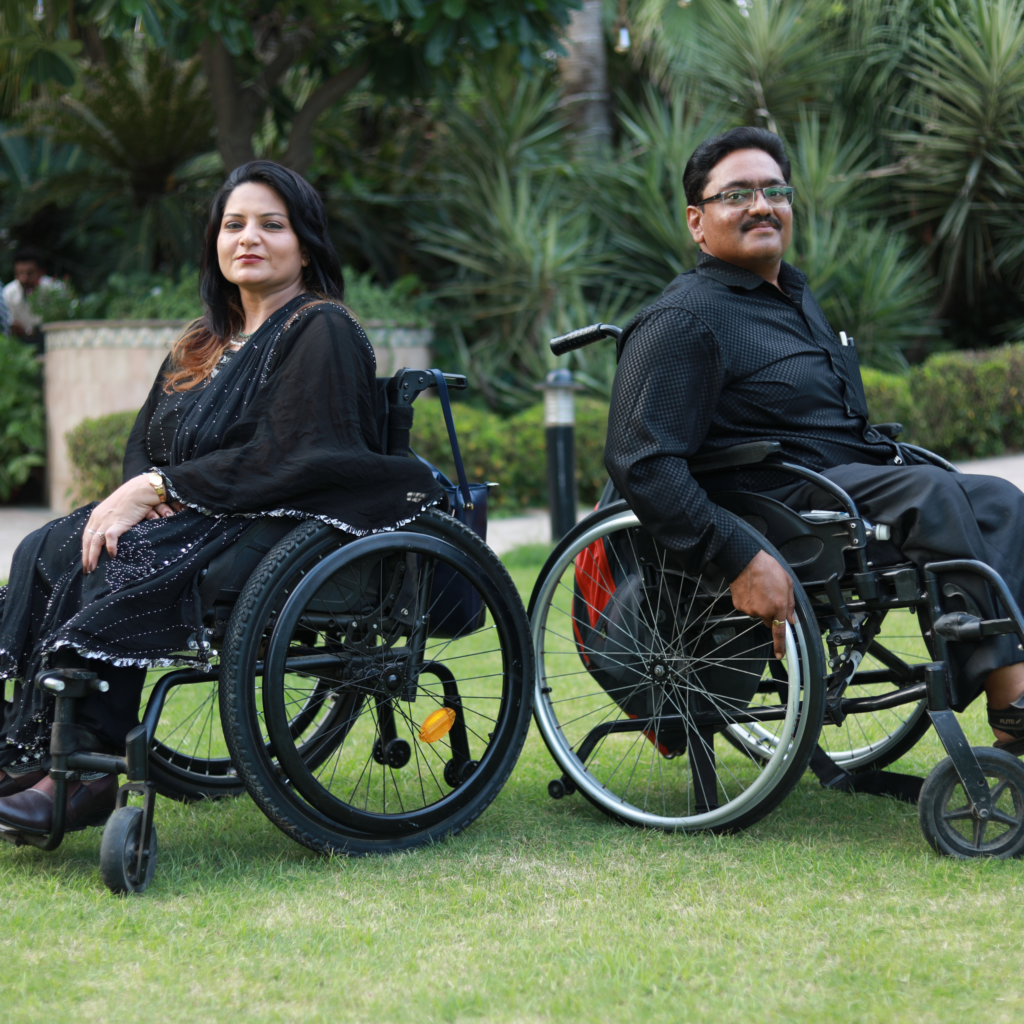
Here’s a number that should make every employer and policymaker pause: of the 13 million employable differently abled individuals in India, only 3.4 million have actually found work. That’s an enormous reservoir of talent left waiting on the sidelines. Not because they lack capability, but because no one thought to open the right doors for them.
Now, consider what changes when those doors aren’t just standing open but are constructed with intention for the people who need them. That is precisely the role skill training programs play for differently abled individuals. They do more than teach a trade or introduce a tool. They redefine the relationship between confidence, opportunity, and access. And with inclusive hiring finally building real momentum across the country, the timing feels exactly right.
In this blog, we explore how inclusive skills training is changing the game for differently abled individuals and what it means for organisations ready to step up.
The Employment Gap Is Real. And Skill Training Fills It
In India, only about 36% of differently-abled individuals are part of the workforce. Compare that to nearly 60% for the general population, and the gap speaks for itself. It gets worse for differently abled women, where participation drops to around 23%. Behind every one of those numbers is a real person, qualified and eager to work, who keeps hitting barriers before they even get a fair shot.
What keeps people out? Workplaces that weren’t designed with accessibility in mind. Hiring biases that should have been retired long ago. Training programs are disconnected from what employers actually need. Skill training for differently abled individuals cuts through every one of these barriers, equipping participants with job-ready skills that match real-world demand.
The Indian government’s Skill Council for Persons who are Differently Abled (SCPwD) does not treat accessibility as a checkbox. Its training centres come equipped with Braille-enabled materials, screen readers, and sign language interpreters, all structurally integrated into the program from the start. This is not retrofitted inclusion. It’s how the program was designed to work.
What Makes Inclusive Skills Training Actually Work?
Training programs are not all cut from the same cloth. When one truly opens doors for differently abled individuals, it reaches far deeper than scheduled workshops. It shifts self-perception and challenges how employers evaluate potential. That’s the real line between a decent program and one that becomes a turning point:
Customised learning environments
Training centres built around assistive technologies, accessible infrastructure, and flexible delivery models create an environment where every participant can learn without unnecessary friction getting in the way.
Industry-aligned curriculum
The most effective programs collaborate directly with employers, shaping coursework to reflect the real skill requirements across sectors like IT, retail, hospitality, and customer service.
Placement-linked outcomes
Short-term training under schemes like Pradhan Mantri Kaushal Vikas Yojana (PMKVY) connects directly to placement opportunities, making sure that what people learn actually leads to what they earn.
Soft skill integration
Communication, workplace etiquette, teamwork, and self-advocacy: these are baked into the curriculum for a reason. Technical skills alone won’t get someone through the door. Confidence will.
Mentorship and peer support
There’s a powerful shift that happens when participants see someone who’s been in their shoes actually make it. The internal narrative moves from “I can’t” to “I will.”
Beyond Skills: Building Confidence and Independence
There’s something most people miss about skill training for differently abled individuals, and it has nothing to do with technical ability alone. When a person who’s been told for years that they can’t do something finally proves otherwise, that single moment of realisation sends shockwaves through every part of their life.
Participants stop measuring themselves against their limitations and start leaning into their strengths. They gain the confidence to navigate complicated systems like healthcare and employment with real clarity. Before long, they are stepping up as advocates for themselves and for the people around them.
It’s this very spirit of empowerment that drives Almawakening Foundation’s Education & Skills Training initiatives. The philosophy at the core is refreshingly simple: equip people with real skills, wrap them in real support, and watch what happens. They don’t just get hired. They start building lives.
Why Employers Should Pay Attention
Inclusive hiring has nothing to do with charity. It has everything to do with smart strategy. Organisations that make a conscious effort to recruit differently-abled employees don’t just talk about impact. They measure it:
- 28% higher revenue than companies that overlook differently-abled talent.
- 30% stronger profit margins, powered by diverse thinking and creative problem-solving.
- 50% lower employee turnover where inclusive cultures are more than just a policy on paper.
- Up to a 20% lift in team innovation, thanks to the richness of cognitive and experiential
Industries like hospitality, tech, and retail have already made this work. They have placed differently-abled individuals in client-facing positions and watched old assumptions fall apart. The workforce ecosystem is evolving, with skill training programs accelerating that evolution by preparing capable, driven candidates for real opportunities.
The Road Ahead: What Needs to Change
The path is changing, but the pace still needs to be faster. For skill training to actually create equal opportunities for differently abled individuals, several key elements have to come together:
Scale training infrastructure
Training centres need to reach beyond the big cities. Tier 2 and Tier 3 towns deserve the same access. The opportunity can’t stay locked inside metros forever.
Strengthen employer partnerships
Organisations and training providers need to co-create programs together, making sure the curriculum stays relevant and placement outcomes are actually delivered.
Leverage digital learning
Digital and hybrid learning formats, like those powered by Skill India Digital, can massively extend reach, especially for individuals who face mobility barriers.
Drive cultural change
Inside workplaces, sensitisation workshops combined with community-driven advocacy campaigns are essential for chipping away at outdated perceptions that persist.
The Bigger Picture: Skill Training Is an Investment in Equity
Each differently abled individual who steps into a training centre and emerges job-ready is a reminder that the system works just fine when it decides to show up. Skill training for differently abled individuals is not about welfare. It’s about unlocking human potential and moving closer to a society that actually plays fair.
At Almawakening Foundation, inclusion is not something we talk about and move on from. It’s woven into everything we do. Our programs in education, skill building, and community empowerment exist for one reason: to make sure every differently abled individual has a real opportunity to find meaningful, dignified employment.
Ready to turn inclusion from a talking point into action?
Reach out to us today to learn about our skill training initiatives, discover volunteer opportunities, or request a custom program built around your community’s needs.