
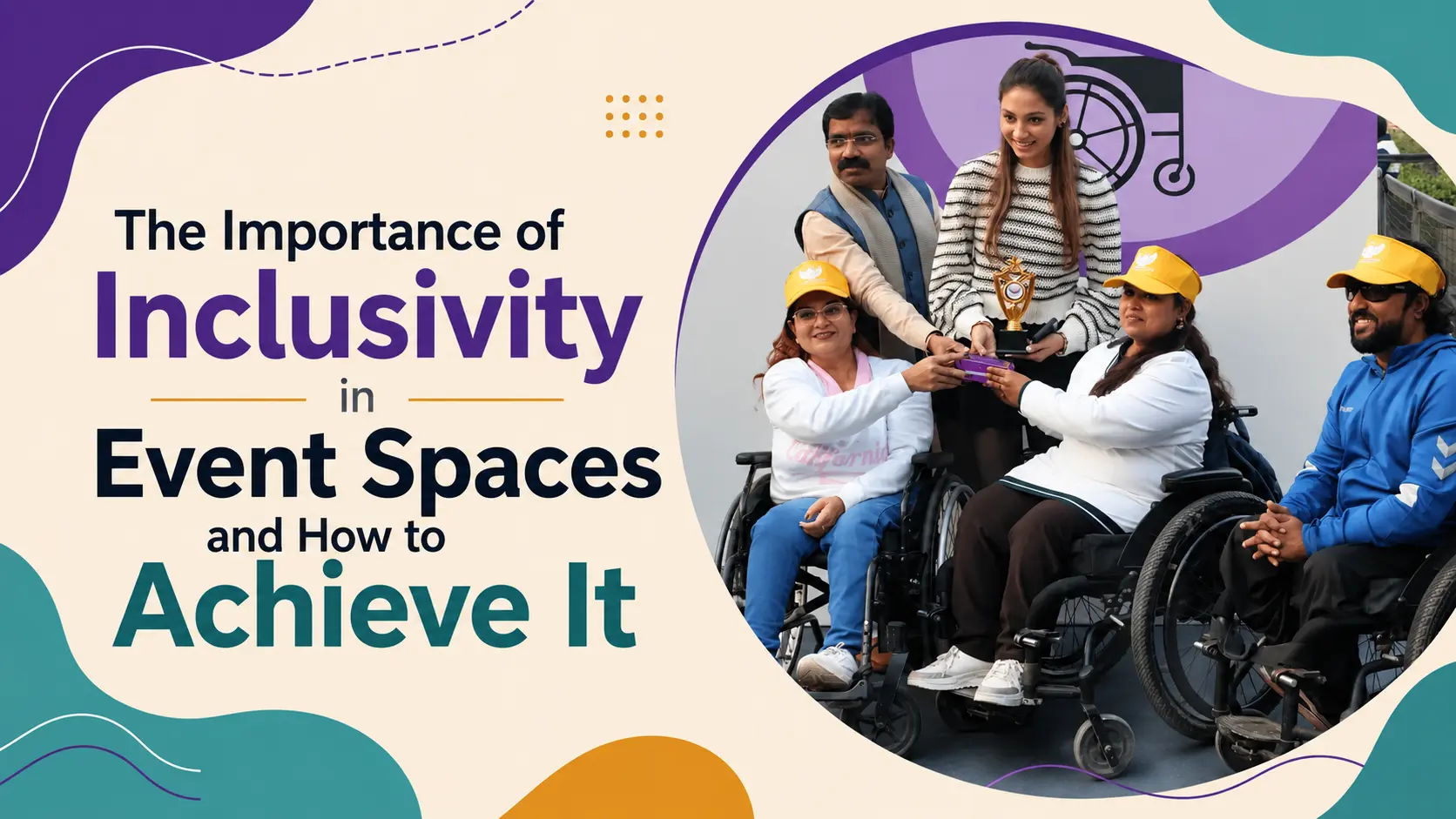
Think about the last event you went to. A conference. A wedding. A community gathering. Now ask yourself something uncomfortable: could every person in your city have walked in and actually taken part? Not just got through the door, but felt genuinely welcomed and comfortable, like they belonged.
For millions of differently abled individuals across India, the honest answer is no. And this is not some small oversight either. It is a failure of imagination, of planning, of basic empathy. The truth is, most event spaces in this country were designed with one kind of person in mind. Everyone else? Afterthought. If that.
Inclusivity in event spaces is not charity. It is a standard we should have hit a long time ago. And until we do, we are keeping people away from experiences that should belong to everyone.
Creating Event Spaces for Everyone
An inclusive space does not start with a ramp at the door. It starts with how you think. It means shaping every part of an event, from registration to restrooms, from seating to sound, knowing that your audience is never going to look or need the same things.
India has over 26.8 million differently abled individuals according to Census 2011, and most estimates today put the real figure much higher. That is not a fringe group. That is a huge part of the country being shut out of public life, social events, cultural celebrations, and professional spaces on a regular basis.
Accessible event spaces are not about ticking regulatory boxes. They are about dignity. When a differently abled person cannot attend a career summit because there is no elevator or misses a cultural event because nobody bothered to arrange a sign language interpreter, the message is loud and clear. You were never part of the plan.
Why Inclusivity in Event Spaces is Essential
Let us be honest here. Exclusion is not accidental. It is wired into the way things get built. And the damage it does is real:
- Social isolation- Differently abled individuals get pushed to the edges of community life when public spaces do not make room for them.
- Economic loss- Inaccessible events keep people away from job fairs, professional development, and industry gatherings. That is career growth and earning potential, lost.
- Cultural erasure- Without inclusive spaces, differently abled voices go missing from the conversations that shape art, policy, education, and community identity.
- Legal accountability- The Rights of Persons with Disabilities Act, 2016, mandates accessibility in public spaces. Skipping it is not just rude. It is illegal.
Event accessibility is not kindness. It is a right. Every year, we treat it as optional; the gap between us grows.
Key Elements of an Inclusive Event Space
Inclusive spaces do not happen by accident. They are built through deliberate, ground-level planning. Here is what that actually looks like:
- Physical accessibility- Ramps, wide doorways, step-free access, wheelchair-friendly seating, and accessible restrooms. These are baselines. Not extras.
- Sensory inclusion- Sign language interpreters, captioning on presentations, audio descriptions, and tactile guides for those with visual impairments.
- Digital accessibility- Live streaming with closed captions, screen-reader compatible registration pages, and virtual attendance options for people who cannot be there in person.
- Trained staff- Sensitised volunteers and event personnel who know how to help without being patronising about it.
When all of this comes together, you are not just running an event. You are building a space where every person walks in as themselves. No barriers. No apologies.
Inclusive vs Non-Inclusive Event Spaces
| Aspect | Non-Inclusive Space | Inclusive Space |
| Entry and Movement | Stairs-only access, cramped layouts | Ramps, elevators, spacious pathways |
| Communication | Complex language, no support tools | Clear language, interpreters, captions |
| Sensory Experience | Loud, overwhelming environment | Balanced, sensory-friendly design |
| Representation | Limited diversity in speakers/content | Diverse voices and perspectives |
| Participation | One-size-fits-all format | Flexible, adaptable engagement options |
The difference jumps off the page. Inclusivity is always on purpose. Never an accident.
The Role of NGOs in India in Promoting Inclusivity
At Almawakening, inclusivity is not something we talk about in theory. It is a standard we build into real experiences, especially across event spaces. Here is how:
- We push for inclusive infrastructure. We work with event organisers, institutions, and communities to make accessible event spaces the norm, not the exception. Designed thoughtfully from the ground up.
- We educate the people running things. Workshops, consultations, and awareness drives. We give teams a clear picture of what real event accessibility looks like and how to actually pull it off.
- We empower differently abled individuals. Our work goes well past access. We open doors to participation, expression, and leadership, so people are not just included but actively involved.
- We build platforms for diverse voices. We create and champion spaces where people from all backgrounds share their experiences, perspectives, and talents without hitting a wall.
- We drive change on the ground. Inclusivity is not a checkbox. We are constantly strengthening systems, shaping policies, and building environments where inclusion is just how things run.
Lasting change happens when inclusivity is woven into the foundation of every experience. Through collaboration with organisers and communities, we make sure nobody gets excluded, and every space we touch feels genuinely open.
Empowering All Voices in Event Spaces
True inclusivity is not about carving out a separate corner for differently abled attendees. It is about creating one room where everyone belongs.
That means putting differently abled voices at the centre of event programming, not as a token panel on “inclusion” but as keynote speakers, performers, decision-makers, and collaborators. When we get that right, the impact outlasts any single event. We make participation normal. We challenge stereotypes. We show that inclusive spaces are not just possible. They are more powerful, more creative, and more human than anything built on exclusion.
Ready to shape a world where nobody gets left behind? Connect with Almawakening Foundation today to partner with us, volunteer, or support our mission because inclusion is not a cause. It is a promise we live by.