
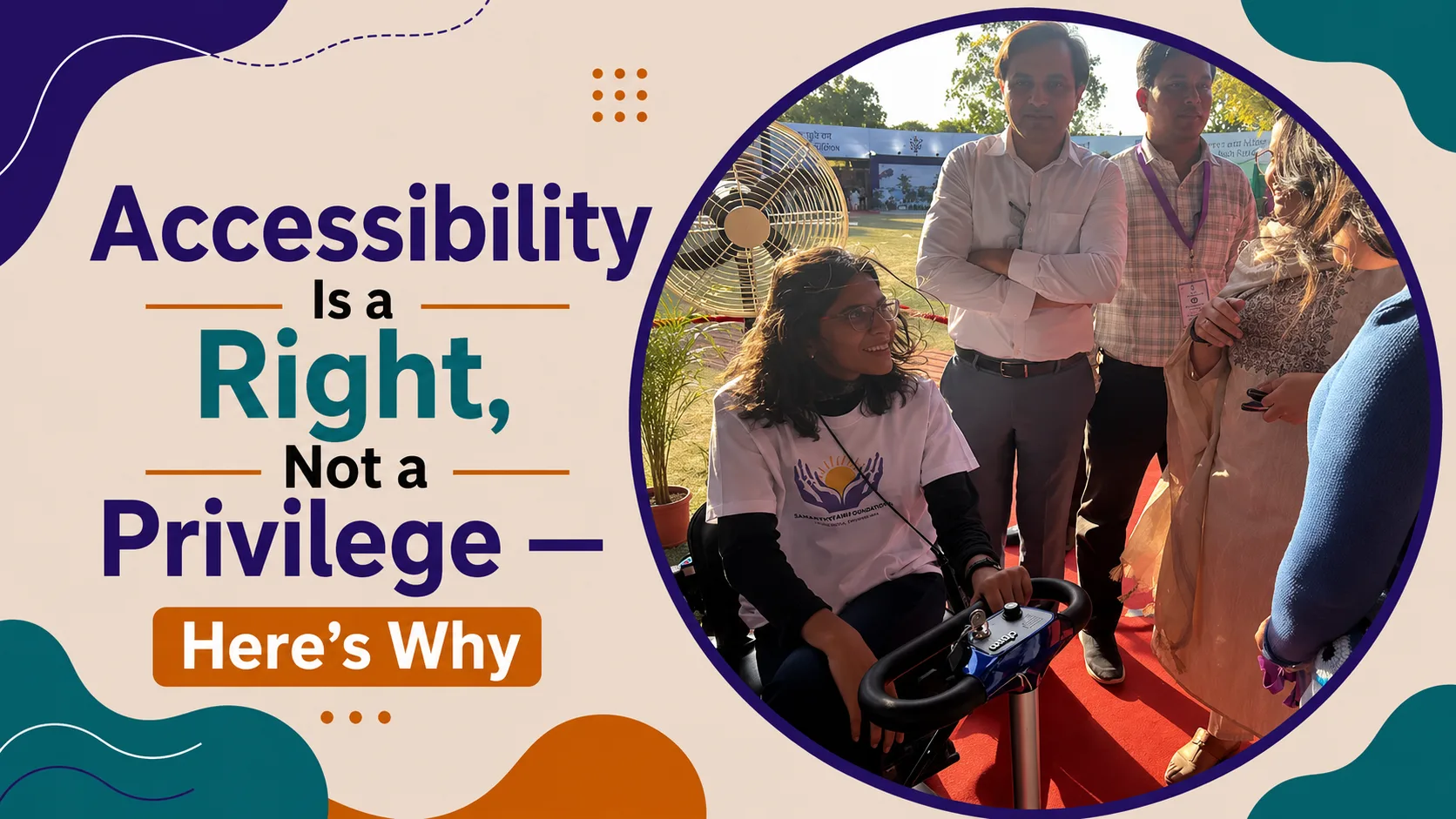
In 2025, millions still run into barriers that never should have survived this long. New websites go live without working with screen readers, and buildings are still designed with accessibility tacked on at the end. Transit networks remain only partly usable. Qualified candidates are filtered out—not for lack of skill, but because the application itself is inaccessible.
After decades of disability rights laws and rising awareness, equal access is still, for many, frustratingly out of reach. The distance between our vision of an inclusive society and the realities people meet each day exposes a hard truth: we continue to treat accessibility as optional, not essential. Real equality and inclusion ask for more than good intentions—they require systemic change.
What are Accessibility Rights
We can pass every disability rights law on the books. If our community doesn’t include people with disabilities, those rights won’t reach the sidewalk, the classroom, or the office. Laws create the framework for accessibility rights—but real change shows up in everyday choices, designs, and attitudes.
An inclusive society isn’t built only in parliaments and courtrooms; it’s built in homes, shops, websites, schools, and workplaces. When we prioritise equal access in the ordinary moments—ordering food, catching a bus, applying for a job—we turn disability rights from policy into practice. That’s where equality and inclusion stop being slogans and start being someone’s lived experience.
Accessibility Rights in Today’s World
When we talk about disability rights, we’re really talking about a wide spectrum—mobility challenges, visual and hearing impairments, cognitive and neurological differences, temporary conditions from injury or illness, and the age-related limitations most of us will face sooner or later. The truth is, disability touches everyone, directly or through someone we love.
The World Health Organisation estimates that more than one billion people live with some form of disability—about 15% of the world’s population. That’s not a small group at the margins; it’s a vast part of humanity that deserves equal consideration in how we design our world. Discussing disability rights means recognising a broad range: mobility limitations; vision and hearing loss; cognitive and neurological differences; temporary disabilities from injury or illness; and the age-related limits many will face.
Why Accessibility Benefits Everyone
It might surprise you, but when we design with accessibility in mind, the result helps everyone. This idea, known as universal design, shows that equality and inclusion aren’t zero-sum games. That principle—universal design—makes clear that equality and inclusion don’t come at anyone’s expense. Consider these everyday examples:
- Curb cuts were created with wheelchair users in mind, yet they’ve become indispensable for parents with strollers, delivery workers with carts, and travellers rolling luggage.
- Closed captions support deaf and hard-of-hearing viewers, and they also help language learners or anyone watching in noisy places.
- Voice-to-text tools assist people with mobility impairments while also letting busy professionals dictate messages as they multitask.
- Automatic doors offer independence to wheelchair users and convenience in carrying packages.
These innovations show that accessibility for all doesn’t weaken functionality—it elevates it for everyone.
Small Changes Make Big Impact
Building an inclusive society doesn’t always demand sweeping reforms. Often, deep progress grows from small, intentional shifts that honour and accommodate the varied needs within our communities. Small changes that help make access universal include:
- Use clear language in signage and communications
- Offer multiple ways to access information and services
- Train staff to assist people with diverse needs respectfully
- Plan for accessibility from the very start of design
- Listen to feedback from people with disabilities about their experiences
Breaking Barriers in the Digital Era
As life grows ever more digital, accessibility rights reach well beyond physical spaces. Today, online access is as vital as getting through a doorway—perhaps even more—because so much of everyday living now happens on the internet. Websites, mobile apps, and digital platforms must be created with equal access for all.
- Ensuring screen readers can move through content without friction
- Adding descriptive alt text to images
- Keeping the colour contrast high enough for comfortable reading
- Offering keyboard-first, keyboard-friendly navigation options
- Shaping content that’s straightforward to understand and use
Here’s the simple truth of digital accessibility: it makes things better for everyone. Clear navigation, readable typography, and sensible structure support all users, not just people with disabilities, every day.
Summing Up!
Accessibility is a fundamental right, not a privilege. When we take this truth seriously and pull together to clear obstacles, we’re not only supporting people with disabilities; we’re making life work better for everyone. The real question isn’t whether we can afford to prioritise accessibility rights; it’s whether we can afford neglect. In a world where inclusion sparks ideas and equality keeps progress moving, building an inclusive society is a decent path and a shrewd one. Let’s move “accessibility for all” from slogan to standard. The future hinges on it—and, in truth, so do all of us.