
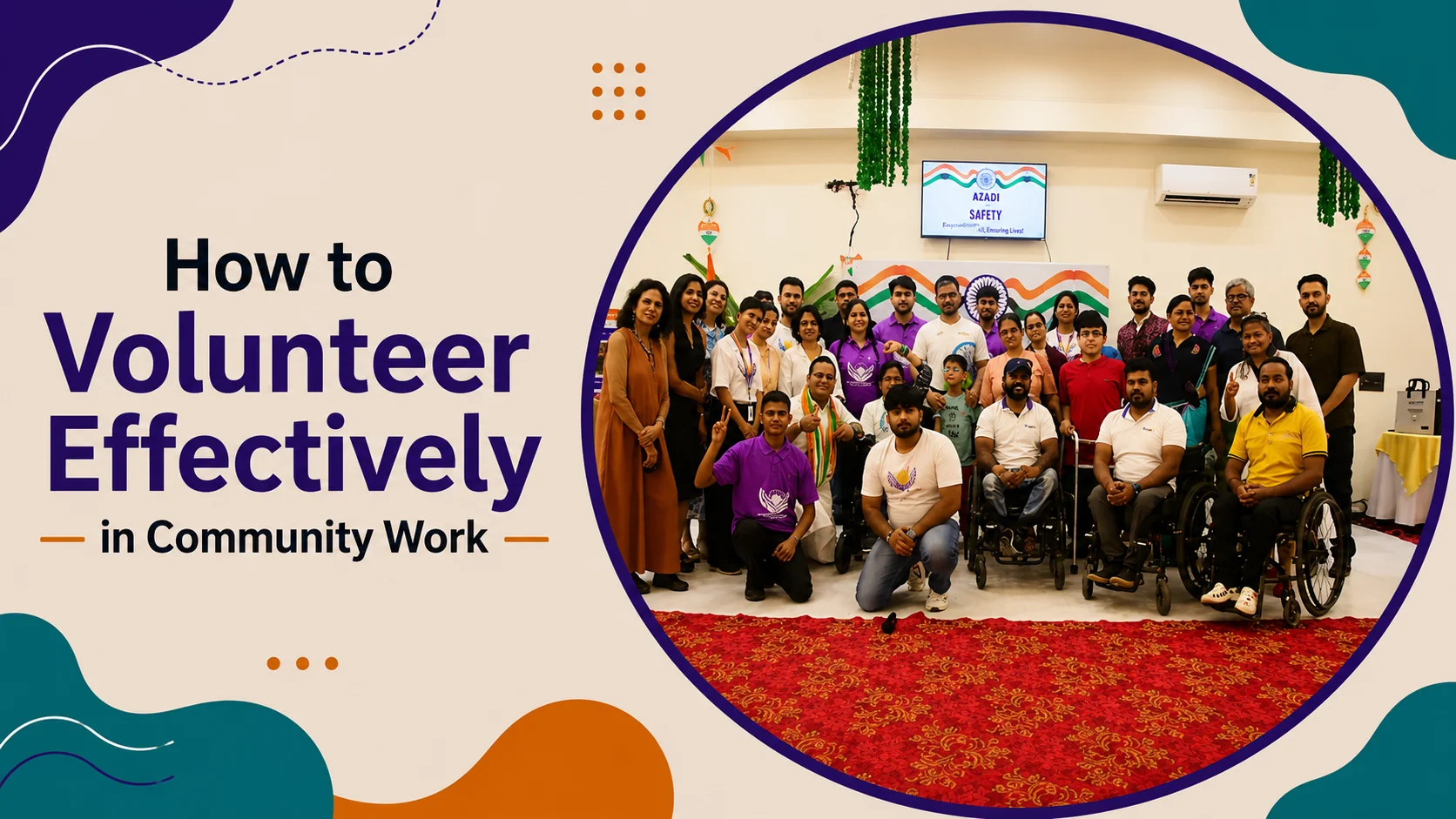
Volunteering is not simply about lending a hand; it’s about recognising the layered realities our neighbourhoods carry and nurturing change that lasts day after day, from spreading mental-health awareness, especially for people with disabilities, to designing resilient Corporate Social Responsibility (CSR) programmes, true service or dedication calls for sincere intent, strategy, and humility to embrace every human kind and be respectful to one and all.
At Alma Awakening, we work to lift marginalised voices and spark ripples of progress across the country. Whether you’re a corporate team seeking deeper CSR outcomes or an individual driven by disability rights and inclusive practices, this guide offers practical steps for walking the path toward meaningful, community-rooted service.
Understanding Your Why and What You Bring
Before we step into volunteer work, we need a clear view of the realities in India and America. In India, over 26 million people are living with disabilities, yet only 34% of children with disabilities attend school on a regular basis. In the United States, approximately 61 million adults have a disability, while employment for people with disabilities stands at just 19.3% compared to 66.3% among those without disabilities.
Supporting the mental health of people with disabilities is complex for many reasons, and CSR frameworks create opportunities in every region. In India, social stigma still keeps families from seeking care, and companies with a net worth of ₹500 crore or more must spend at least 2% of their average net profits on CSR under the Companies Act 2013.
Whereas, in the United States, access hurdles and insurance gaps remain major obstacles to quality mental health care, yet more companies see that genuine community engagement advances social impact and business value, even without mandated CSR. Well-meaning volunteering can fall short when it overlooks the deeper, systemic dimensions of the issue. To be effective, we must meet immediate needs and also dismantle the cultural, economic, and social barriers that block inclusive participation in the life of society.
Finding NGOs Near You to Volunteer With in India
If you have been searching for “NGOs near me to volunteer”, the answer may be closer than you expect, and choosing nearby matters more than people realise, because a volunteer who can show up in person, month after month, builds the trust that one-off help never does. At Almawakening Foundation, volunteers sit at the centre of how we work.
They stood behind our Empowering Abilities Enabling Access series, which drew more than 300 attendees across Delhi NCR, behind the ENABLE programme that placed AI-enabled smart vision glasses with 26 people with visual impairment alongside Dr Shroff’s Charity Eye Hospital, and behind initiatives that have reached over 15,000 people across 10 states.
Before committing anywhere, verify the organisation on the government’s NGO Darpan portal, and if giving time is not possible right now, small donations carry their own impact. For the wider picture of what local organisations make possible, start with our guide to NGOs near me and how local organisations support communities.
The Inclusion Gap in CSR
Many CSR strategies promise “inclusion”, but daily reality at work rarely shifts when employees only see slide presentations and rules. Awareness grounded in lived experience is the catalyst that actually sticks. When a speaker brings real stories, respectful language, and simple everyday actions, teams move from checking boxes to caring. That movement is what keeps any policy, budget, or infrastructure change alive over time.
Common CSR pitfalls to be fixed
- One-time events with no follow-up
- Infrastructure without changing behaviour
- Generic training that ignores disability and mental health
- Metrics that track attendance, not outcomes
What can be done instead
- Lived-experience talks that spark empathy fast
- Hands-on empathy labs where teams practice inclusive language and micro-actions
- Accessibility walk-throughs that deliver quick wins in offices, events, and content
- Manager toolkits that turn intent into daily habits and accommodations
The Road Ahead
Even with strides in disability rights and CSR policy, the work of inclusion is unfinished. Mental health support for disabled people must grow substantially and be culturally responsive, and corporate volunteer efforts need on-the-ground alignment. Above all, more volunteers should step up as advocates and speakers who build awareness and push policymakers toward structural change.
What We Offer and How to Help
At Almawakening, we lead awareness sessions that destigmatise seeking help and encourage thoughtful, respectful language; host moderated peer circles where people and carers can connect in safety, build volunteer pathways that turn goodwill into real-world impact; and provide consulting for schools and employers to embed inclusion in daily practice. If you are an individual or carer, reach out to learn more about upcoming peer circles, volunteer opportunities, or awareness sessions happening in your community.
When your time is focused, it becomes powerful. We pair you with roles that fit your skills and availability—whether that’s helping with events, acting as an accessibility buddy, doing basic content checks for readability and accessibility, mentoring in digital basics or employability, or sharing respectful social stories that amplify lived experience. Choose the commitment that works: a starter path of two hours a week for eight weeks, an event track of one Saturday a month, or a project sprint running two to four weeks. Tell us your skills, time band, and comfort areas, and we’ll lead you to a role that matters.
Conclusion: Your Journey Starts Now
Volunteering is not about being perfect or having everything figured out. It’s really just about showing up, lending a helping hand with an open heart, and learning, growing, and serving. The thing is, every time you give your time to something you care about, you’re doing something real. You’re connecting with people, making someone’s day a little enlightened.
So if you’ve been thinking about it, just do it. Discover meaningful volunteer opportunities in community empowerment, disability rights, and mental health support by visiting Alma Awakening, and find ways to get involved and help advance lasting social change.